17822249761782995912.webp)
Summer Shopping Tour in Riyadh: Your Complete Guid...
Jun 22, 2026


No Product added to cart
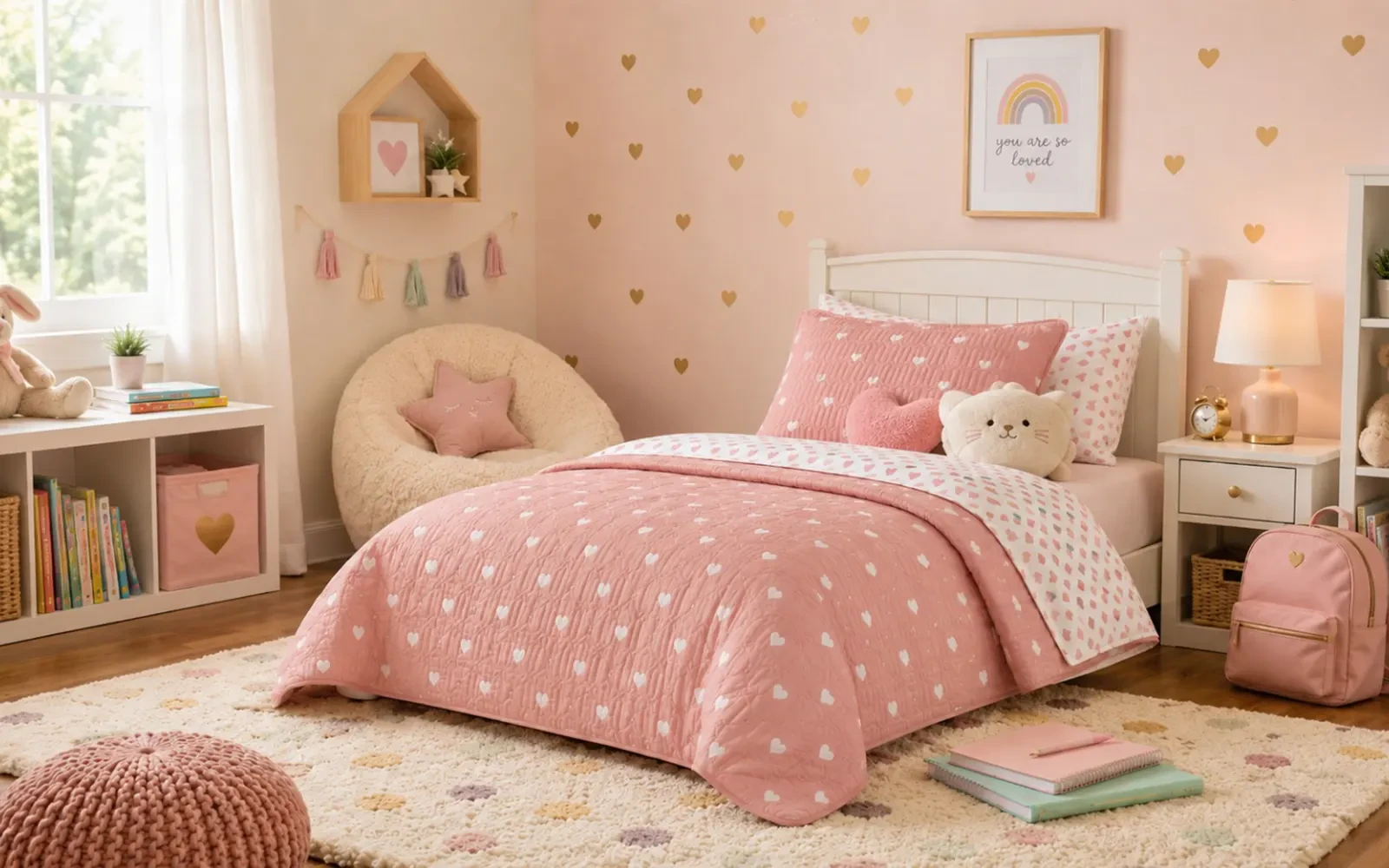
Choosing kids bedding is not only about prints and colours. Fabric, softness, ease of washing and mattress size all affect your child's comfort and how practical the bedding is to use every day.
With cotton kids bedding, comforter sets, duvet cover sets and playful printed designs available, choosing the right option can feel difficult. This guide explains the key points that will help you select comfortable, practical bedding for your child and their bedroom.
Before choosing a design, start with four essentials: fabric, size, ease of care and comfort.
A bedding set may look attractive in photos, but it will not remain practical for long if it is difficult to wash or does not fit the mattress properly. Consider how the bed is used every day before making a purchase.
In many homes across the Gulf, including the UAE, Saudi Arabia and Oman, air conditioning is used for long periods, so the thickest bedding is not always the best choice. In some cases, a lightweight or medium-weight set is more practical, with an extra layer added when needed.
Cotton bedding for children is a popular choice because of its comfortable feel and straightforward care.
However, seeing the word "cotton" on a product label is not enough. Check the cotton content, fabric weave, washing instructions and the pieces included in the set.
When choosing a cotton set for your child's bed, check:
These details make it easier to compare products, especially when shopping online.

Looking for soft kids bedding is natural, but the word "soft" can mean different things from one product to another.
Softness depends on the fibre type, weave and fabric finish, so it is better not to rely on a short product description alone.
When shopping in store, feel the fabric before buying. When shopping online, review the material description, care instructions and customer feedback, if available.
The priority is bedding that feels comfortable while your child sleeps, not only when it is first touched.
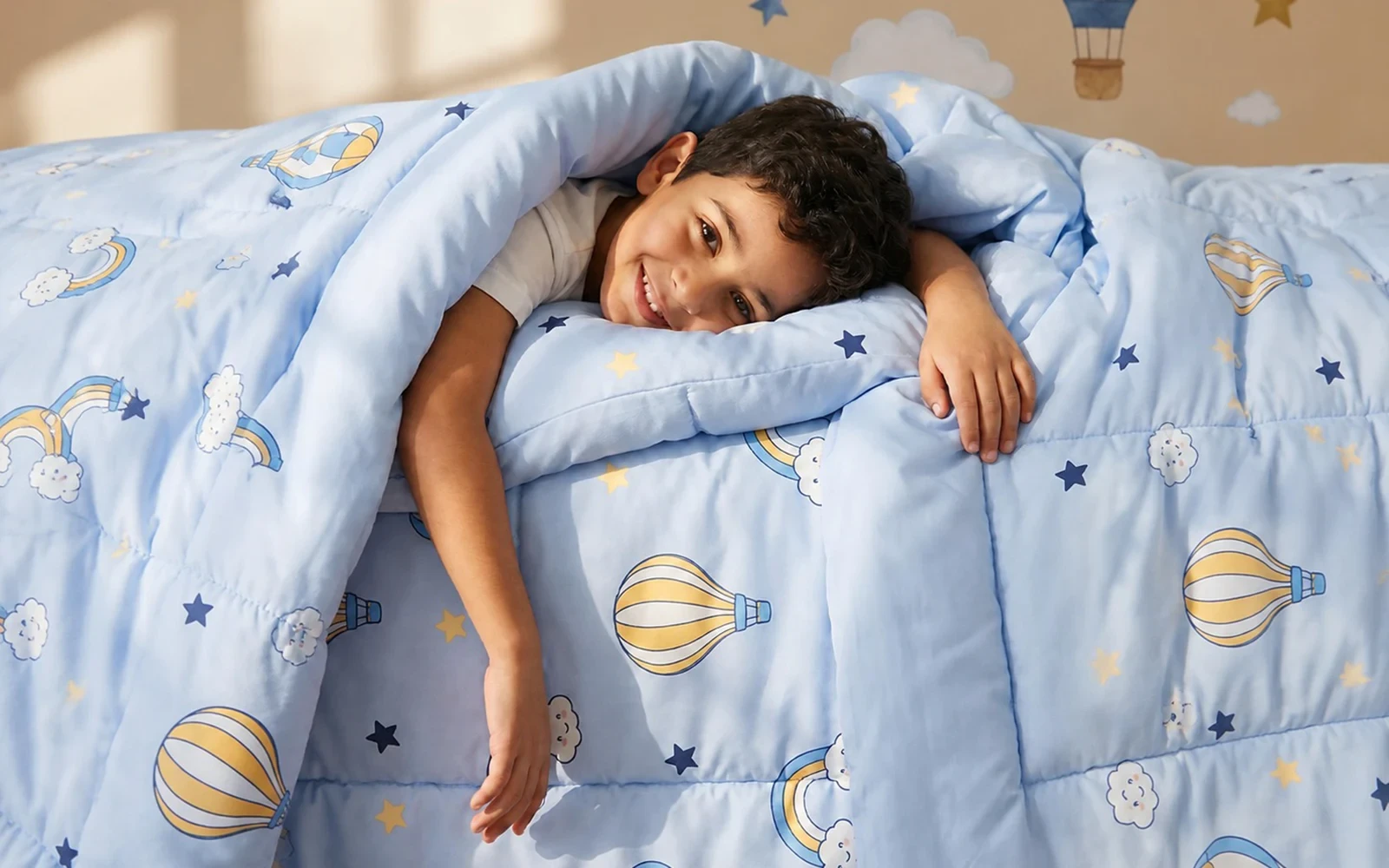
In a child's bedroom, bedding does not stay perfectly arranged all the time.
Drinks may spill, sheets may become dirty during play, and the set may need to be washed more than once within a short period. Choosing practical bedding can therefore save considerable time and effort.
Look for a bedding set that:
From practical experience with bedding, one common mistake is focusing on appearance before checking the size and contents. Always review the dimensions and confirm whether the product includes a filled comforter or only a duvet cover before buying.
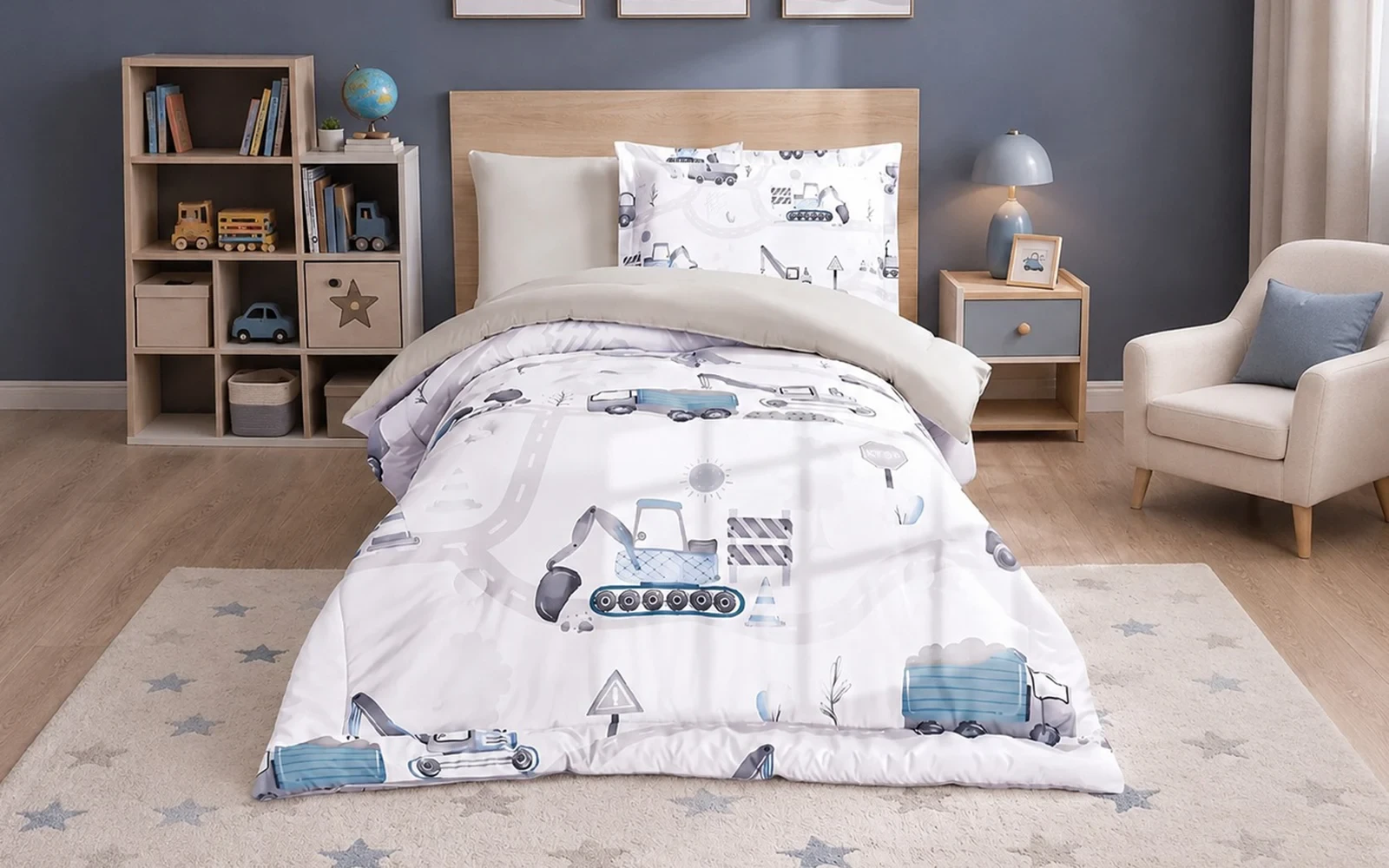
Printed kids bedding can be a great option when your child enjoys animals, stars, cars, space or other playful themes.
The design should still coordinate with the rest of the bedroom.
If the walls, rugs and toys already feature many colours and details, simpler bedding can create a calmer visual balance. If the bedroom decor is understated, a printed set can become the main feature that adds colour and personality.
A useful approach is to select several options that meet your requirements for fabric and size, then let your child choose the design they prefer.
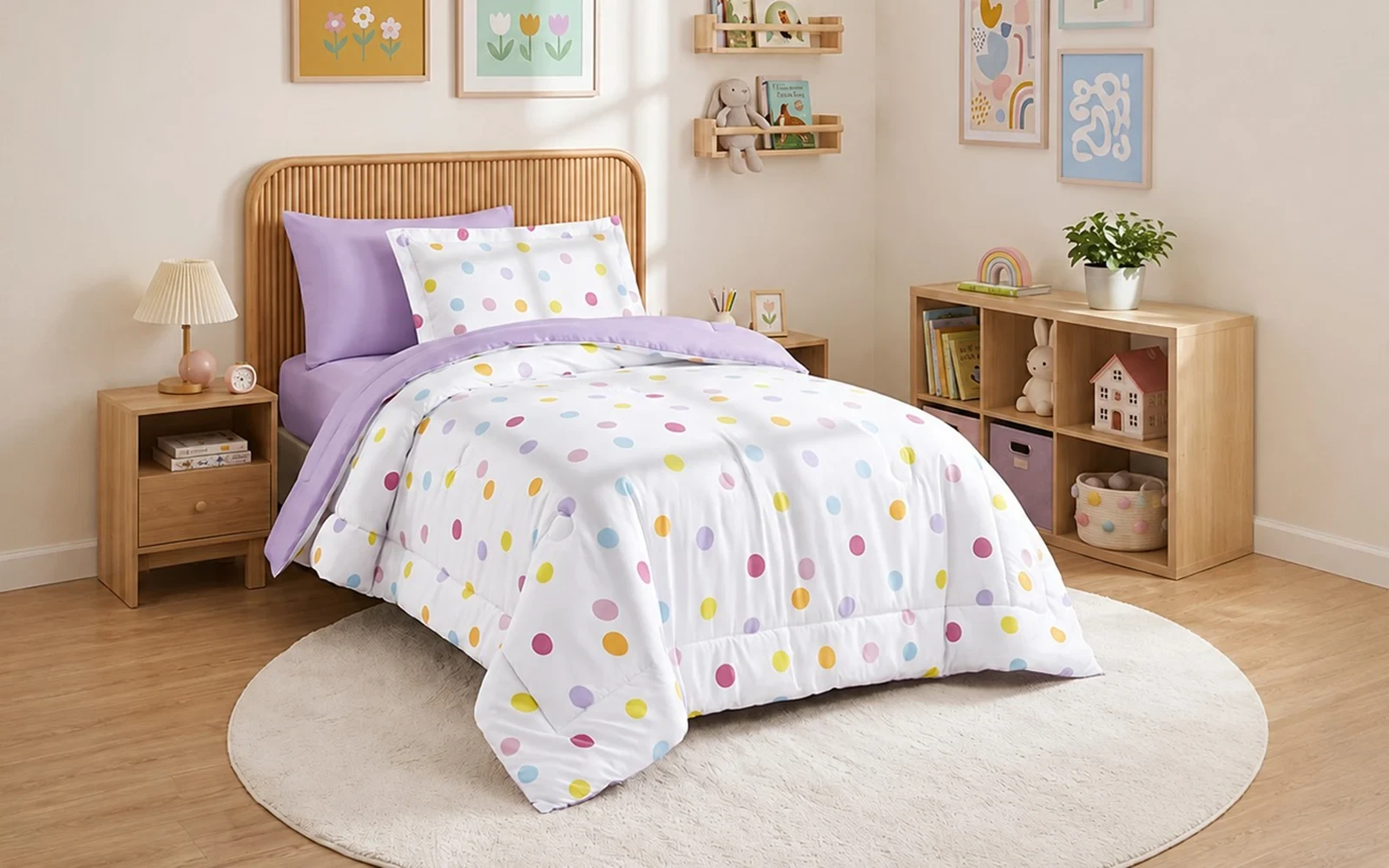
The right choice depends on how you prefer to use and care for the bed.
A kids comforter set usually includes a filled comforter that is ready to use. It is suitable when you want a complete set without buying a separate duvet insert.
When choosing a comforter, consider its weight, the temperature of your child's bedroom and the care instructions.
A kids duvet cover set includes a removable cover designed to hold a separate duvet insert.
The cover can be removed and washed separately, and changing it gives the bed a different look without replacing the entire duvet. This can be a practical choice for families that enjoy refreshing the bedroom design from time to time.
A common mistake is choosing bedding based only on labels such as "kids size" or "single bed".
Measure the mattress before buying:
Length x width x mattress height
Mattress height is especially important when buying a fitted sheet. A sheet may match the mattress length and width but still be too shallow for its depth. Always compare measurements in centimetres rather than relying on the size name alone.
You can also review any certifications or standards displayed on the product.
For example, OEKO-TEX® STANDARD 100 indicates that the components of a certified item have been tested against criteria covering a wide range of potentially harmful substances.
Certification is not the only consideration when choosing bedding, and the absence of a label does not automatically mean a product is unsuitable. It can, however, provide an additional point of comparison between products.
It is important to distinguish between bedding for older children and an infant's sleep space.
For infants, the American Academy of Pediatrics recommends a firm, flat sleep surface with a snug fitted sheet and no pillows, blankets or loose soft items in the sleep area. When preparing a baby's cot, safe sleep guidance should come before appearance or the number of pieces in a set.
This simple process reduces the chance of buying the wrong size or a set containing pieces you do not need.
An extra bedding set can be very useful in a child's bedroom. When one set is being washed, another is immediately available.
For example, you can keep a simple cotton set for frequent use and another printed set to refresh the bedroom decor from time to time.
No single fabric is right for every child. Look for a material that is soft, comfortable, easy to wash and suitable for the bedroom temperature. Cotton is a popular option for these reasons.
A cotton bedding set can be practical and comfortable, but check the cotton content, fabric quality and washing instructions before choosing.
A comforter is a filled, ready-to-use piece. A duvet cover is a removable cover placed around a separate duvet insert and can be taken off for washing.
Measure the mattress length, width and height in centimetres, then compare those figures with the dimensions shown on the product page.
It is not essential, but it can be very practical when bedding is washed frequently or needs to be changed quickly.
The best kids bedding is not necessarily the most expensive or the busiest in design.
A good choice combines comfortable fabric, the correct size, easy care and a design that suits your child's age and bedroom decor.
Whether you prefer a soft cotton set, a playful print, a comforter or a duvet cover, focus first on your child's needs and how the bed is used each day.
The simplest details often matter most: comfortable bedding, a fitted sheet that stays securely on the mattress, a design your child likes and a set that is easy to wash and maintain.


(0) Comment
Write a comment